
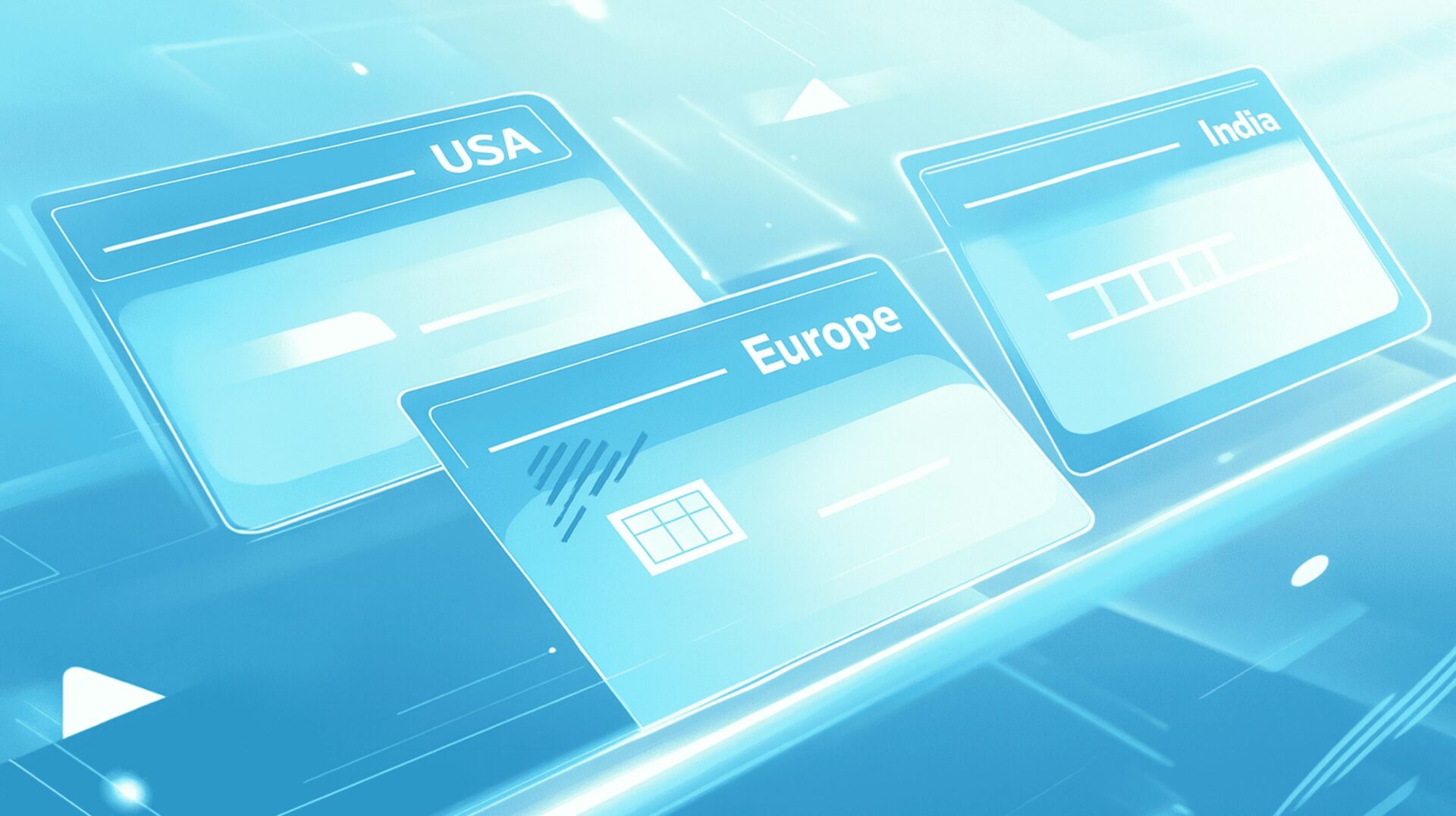
Choosing how to move money is not just a technical task. It shapes customer trust, checkout speed, and expansion plans. When you compare payment systems, you see real differences between regions, rules, and habits. This guide explains how digital payment systems work in the EU, USA, and India, what they cost, how safe they are, and what to expect when you sell across borders. Along the way, you will see where DigitalBPM can remove friction and help you grow.
How Payments Work
Every payment has the same basic path. A buyer agrees to pay, a system captures the details, a network routes the request, and banks move funds. Around that path sit risks, rules, and user experience. The EU leans on open banking and strong identity flows. The USA relies on cards and flexible bank rails. India has a real‑time network that makes instant transfers part of daily life. DigitalBPM brings these different rails into one workflow you can control and monitor.
Payment Methods Comparison
Picking methods is about fit: where your buyers live, how they prefer to pay, and what risks you can accept. Cards are familiar and fast for online checkout. Bank transfers cut network fees and work well for bigger amounts or subscriptions. Mobile wallets can lift conversion on phones. In India, UPI is built into daily life, so ignoring it hurts sales.
Let’s look at the options:
- Credit and Debit Cards. Cards are the default for online and in‑store payments in many markets. They offer broad acceptance, built‑in dispute paths, and fast authorization. Downsides are higher network fees and chargeback risk. A smart setup routes between acquirers, retries failed payments, and uses network tokens to improve approval rates without extra friction.
- Bank Transfers. Bank payments reduce card fees and work well for invoices, larger baskets, and recurring billing. In the EU, open banking enables confirmed bank‑to‑bank pay with strong customer authentication. In the USA, ACH fits scheduled pulls. Good practice is to verify accounts up front and show clear status updates while funds settle.
- Mobile Wallets. Wallets store cards and identity in the device, with biometric checks and tokenized details. They often shorten checkout and cut fraud on phones. Support the major wallets in each region and keep your payment page light, so the wallet sheet appears quickly and the buyer stays in the flow.
- UPI (India). UPI links banks, apps, and QR codes for instant transfers. It fits everything from peer‑to‑peer to utility bills and online retail. Offer UPI options that match local habits: app intent, phone number flows, and QR at delivery. Show real‑time status so buyers see that money moved and the order is confirmed.
- Contactless Payments. Tap‑to‑pay supports fast lines and safer handoffs. It covers cards in devices and plastic with chips. For in‑person retail, use terminals that accept taps and digital wallets. For field teams, consider tap on phone, which turns modern phones into lightweight readers with the right app and security checks.
Choosing methods is not set and forget. Review your mix as you enter new regions or add sales channels. Track approval rates, dispute levels, settlement speed, and refund times. Use those insights to tune routing, retries, and fallback options so customers finish checkout on the first try.
Costs and Security Considerations

Costs and risk sit behind every payment choice. Beyond the headline fee, look at cross‑border surcharges, currency conversion, and chargeback handling. Strong identity checks reduce fraud, but too much friction can hurt conversion. The right move is to secure high‑risk moments and keep low‑risk flows smooth.
To make smart decisions, break your cost and risk view into a few simple buckets:
- Transaction Fees. Each method has a base fee plus extras. Cards add network and acquirer costs. Bank rails are cheaper but may need verification or risk tools. Focus on effective cost per approved order, not just the sticker price, and use smart routing to lower that number.
- Exchange Rate Charges. When currency changes, providers add a spread. This can hide in totals and eat margin. Offer local currency pricing where possible, and settle in the currency that fits your costs. For cross‑border flows, map spreads and pick the fairest route.
- Fraud Protection Measures. Use layered checks: device signals, velocity rules, behavioral signals, and strong authentication only when risk is high. Keep challenge rates low for trusted buyers. Review disputes to update rules, and share outcomes with support so they can resolve issues faster.
- Regulatory Compliance. Different regions enforce identity checks, consent, data rights, and reporting. Build consent and disclosure into your UI. Log key actions. Keep clear data flows for audits. Choose partners that update rules quickly and expose settings you can control without code changes.
- Encryption and Authentication. Protect data at rest and in transit. Replace sensitive fields with tokens. Limit who can see full details. Use role‑based access and multi‑factor steps for risky admin actions. Monitor keys and rotate them on a schedule you can track.
Treat costs and risk as a shared job across product, finance, and security. Meet weekly, look at the same dashboards, and ship small changes often. DigitalBPM helps by centralizing logs, rules, and routing, so teams work from one source of truth.
Payment Trends in EU, USA, and India
Payment habits move with culture, mobile use, and rules. The EU pushes strong identity checks and open banking links. The USA still leans on cards and wallets, with early real‑time bank rails gaining ground. India made instant bank‑to‑bank pay common for daily life. Across all three, mobile payment adoption keeps rising, and checkout is moving closer to where customers browse: social, chat, and in‑app moments. DigitalBPM aligns these trends with unified methods, tokens, and clear reporting.
EU Payment Preferences and Innovations
In the EU, cards and bank transfers share the stage, and open banking made direct pay a serious option. Strong identity checks reduced fraud and raised trust, so buyers accept extra steps when the design is clear. Local methods matter a lot, from account‑to‑account pay to popular wallets tied to banks. Merchants watch payment trends in EU like bank pay at checkout, instant transfers between banks, and identity services that make age checks or mandates easier. DigitalBPM supports these flows with regional routing.
USA Payment Preferences and Innovations
In the USA, cards remain the first choice for online and in‑store payments, with wallets growing as phones handle more daily tasks. Bank pulls fit bills and subscriptions, and faster bank rails are improving pay outs and refunds. Social and one‑click checkouts help conversion, but trust and support still drive repeat sales. When you track payment trends in USA, you see card tokens, network updates, and better chargeback tools shaping results. DigitalBPM unifies these rails so you can test and scale safely.
India Payment Preferences and Innovations
India’s market centers on instant bank transfers and QR codes, with UPI at the core. Wallets and cards still play a role, but UPI offers wide reach, simple requests, and fast confirmation. Small stores use QR, larger brands embed UPI in apps and on the web. Watching payment trends in India shows steady growth in real‑time pay for retail, services, and deliveries. DigitalBPM supports UPI alongside cards and wallets, so your checkout stays local while your stack stays global.
Cross-Border Payment Challenges and Solutions

Selling across borders adds steps. You deal with new currencies, extra checks, and different payout times. Banks take longer to talk to each other, and providers add spreads on top of network fees. Support must explain delays and refunds when systems do not line up. The practical path is to localize methods, price in local currencies, and route payments to the acquirer that sits closest to the buyer. DigitalBPM helps with smart routing, currency controls, and clean reconciliation.
Speed and Convenience
Customers want fast approvals and clear status. Latency grows when payments hop across regions or switch rails. Reduce hops by using local acquirers and direct bank links. Keep your checkout simple, prefill known details, and avoid surprise steps. For higher‑risk orders, use silent checks first, and only challenge when needed. Show real‑time states for pay ins and pay outs, and send clear alerts on holds or reviews so buyers and partners never guess what happened.
Fees and Hidden Costs
Cross‑border sales often carry extra network fees and currency spreads that are hard to see. Map your total cost from authorization to settlement, including refunds and chargebacks. Show finance the true payment fees and charges per region and per method, then pick local routes that lower costs without hurting approval rates. In tools like DigitalBPM, tag each flow with region and currency so you can compare apples to apples and fix high‑cost paths first.
Security and Fraud Risks
Fraudsters probe borders where rules differ and data is thin. Protect accounts and payments with device checks, behavior signals, and step‑up identity only when needed. Use tokenization so the system, not your app, holds sensitive data. Keep audit trails for disputes and regulator questions. Buyers now expect secure online payments as a standard, not a feature, so bake security into the flow and keep friction invisible unless risk is high. DigitalBPM centralizes these controls in one place.
How DigitalBPM Supports Seamless Payment Integration
Growing brands need more than a gateway. They need a control layer that plugs into many methods, routes by rules, and explains results in language finance and support. DigitalBPM provides a single API, a clean dashboard, and real‑time rules for retries, routing, currency, and risk. It connects cards, bank rails, wallets, and UPI, and gives you levers to test and measure. For expansion, it offers cross border payment solutions that adapt to local habits without new builds.
Take Control of Your Payments Today
Payments should help you sell, not slow you down. The right setup lifts approval rates, lowers disputes, and makes refunds painless. The wrong setup turns support into a backlog and eats margin. Start by mapping where your buyers live and which methods they expect, then add tools that learn from each attempt. With DigitalBPM, you can try new methods safely, compare routes, and move toward the best payment system for business goals you set for each market you enter.
Join DigitalBPM and Move Money Smarter
Ready to make payments a growth lever, not a cost center? Create a free account at digitalbpm.io and connect your current providers in minutes. You will get one dashboard for cards, bank pay, wallets, and UPI, plus rules you can change without code. Test local methods, route by country, reduce declines, and simplify refunds. Your team sees live status and clean reports, and your customers see fast, trusted checkouts. Start now and turn every payment into a better customer moment!